ARC’s Story #
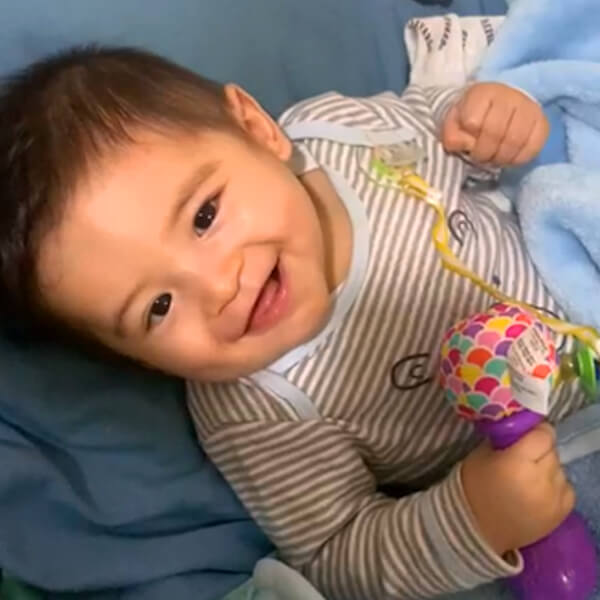
ARC is a two-year-old boy with cerebral palsy that is considered idiopathic, meaning it is not clear what caused his condition to develop. There were no notable complications during the pregnancy itself, but he was born at term after 37 weeks with an obstructed labor and the delivery that was assisted by forceps. As ARC grew, his difficulties with communicating and moving became increasingly apparent.
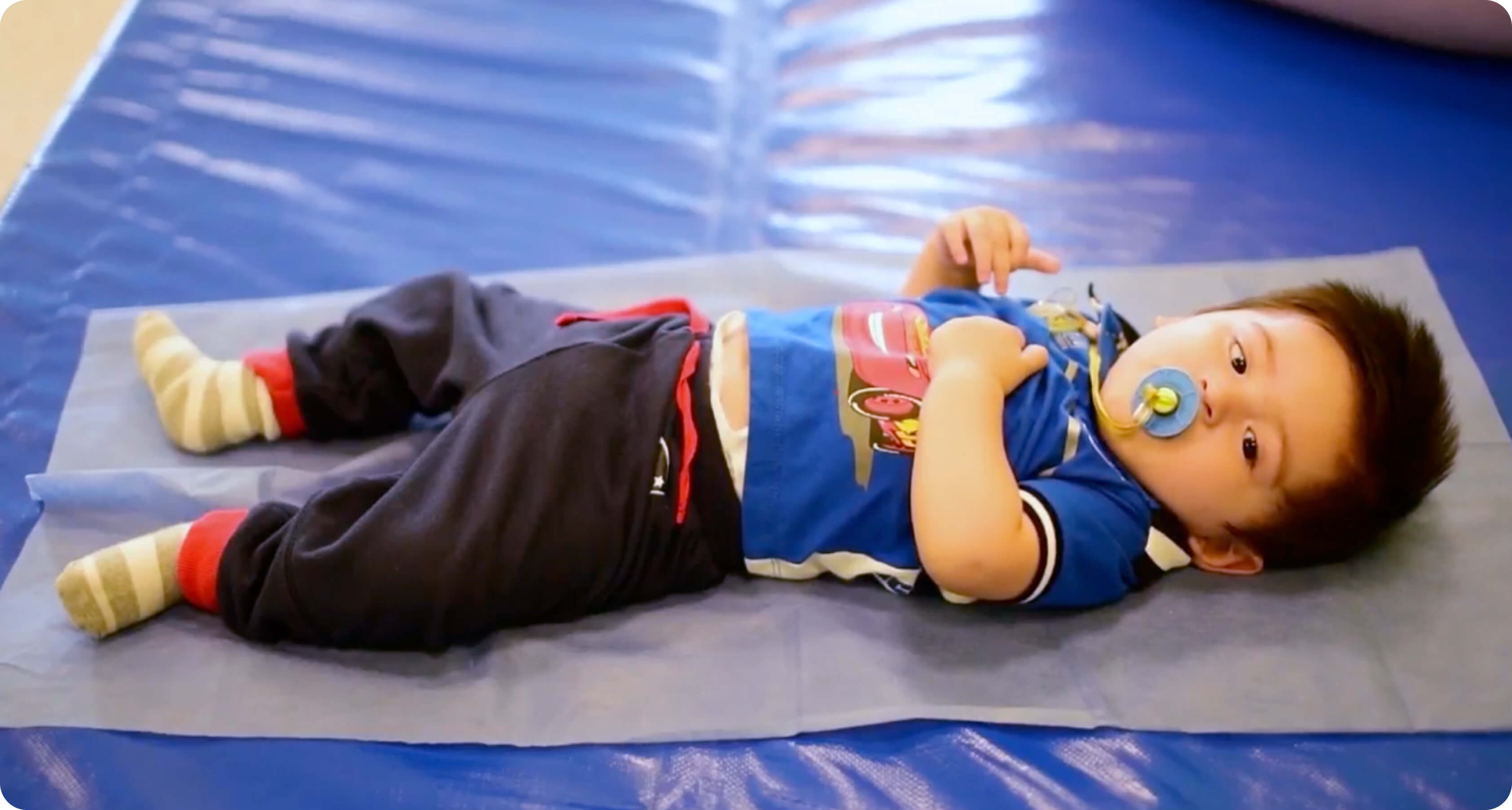
How cerebral palsy affected ARC #
Our pediatric neurologist described ARC’s condition as cerebral palsy with spastic quadriparesis, indicating the presence of muscle stiffness in both arms and legs. He displayed both language and motor delays; at age two, he was still unable to say any words, sit, stand, or walk. His parents noted he also had trouble holding his own head up, he could not sit without support, and he could not grasp objects with his hands.
Symptoms prior to receiving the protocol #
Before the protocol for cerebral palsy, ARC’s symptoms included the following:
- Spasticity in all four limbs (spastic quadriparesis)
- Inability to sit without support
- Inability to walk
- No verbal communication
- Poor head support
- Difficulty using hands to grasp objects
Cerebral palsy protocol #
ARC came to our Monterrey, Mexico clinical research center, where he participated in an open label clinical trial to explore the safety and efficacy of our protocol for cerebral palsy.
ARC’s protocol followed these steps: #
- An MRI (magnetic resonance imaging) scan was performed at a local hospital to visualize his brain structure and precisely locate where the radiofrequency signals should be focused.
- Our neurologist tailored the protocol to ARC’s brain, and our technicians calibrated the device to deliver the correct dose.
- The protocol was delivered for one hour a day for 28 consecutive days at our clinical center.
- After receiving the protocol, NeuroCytonix monitored ARC for any potential negative effects (safety), as well as changes in motor function, behavior, and cognition (efficacy).
Using special, high-resolution MRI (called diffusion tensor imaging, or DTI) along with a computational method known as tractography, we visualized neural tracts in ARC’s brain before and after the protocol. These neural tracts are information “highways” that connect regions across the brain to support functions like movement and cognition.
Electroencephalography, or EEG, is commonly used to assess seizure activity in children and adults with epilepsy.
To assess ARC’s joint spasticity, we used the Modified Ashworth Scale (MAS)1. This test is given by a trained clinician, who can measure how much the muscles around the knees, ankles, wrists and elbows tighten after the joint is moved.
To examine the protocol’s impact on disability, we used the Pediatric Evaluation of Disability Inventory (PEDI)2 and the Pediatric Quality of Life Inventory (PedsQL)3, survey-based tools that explore aspects of daily life. The PEDI tool assesses the daily functioning of children with disabilities, looking at their ability to do things like dressing, eating, and moving around. The PedsQL measures overall well-being and quality of life in children and teenagers.
Life after the cerebral palsy protocol #
After the protocol, ARC’s tractography images showed an increase in his brain’s neural tracts, especially in the corticospinal tract, a pathway associated with movement control. His EEG did not display any significant changes, remaining within the normal range.
On the MAS, ARC displayed lower spasticity in his left elbow, both wrists, and both ankles after the protocol.
On the PEDI scale, ARC improved in the self-care, mobility, and social function domains. On the PedsQL, ARC showed improvement in movement and balance, fatigue, and eating activities.
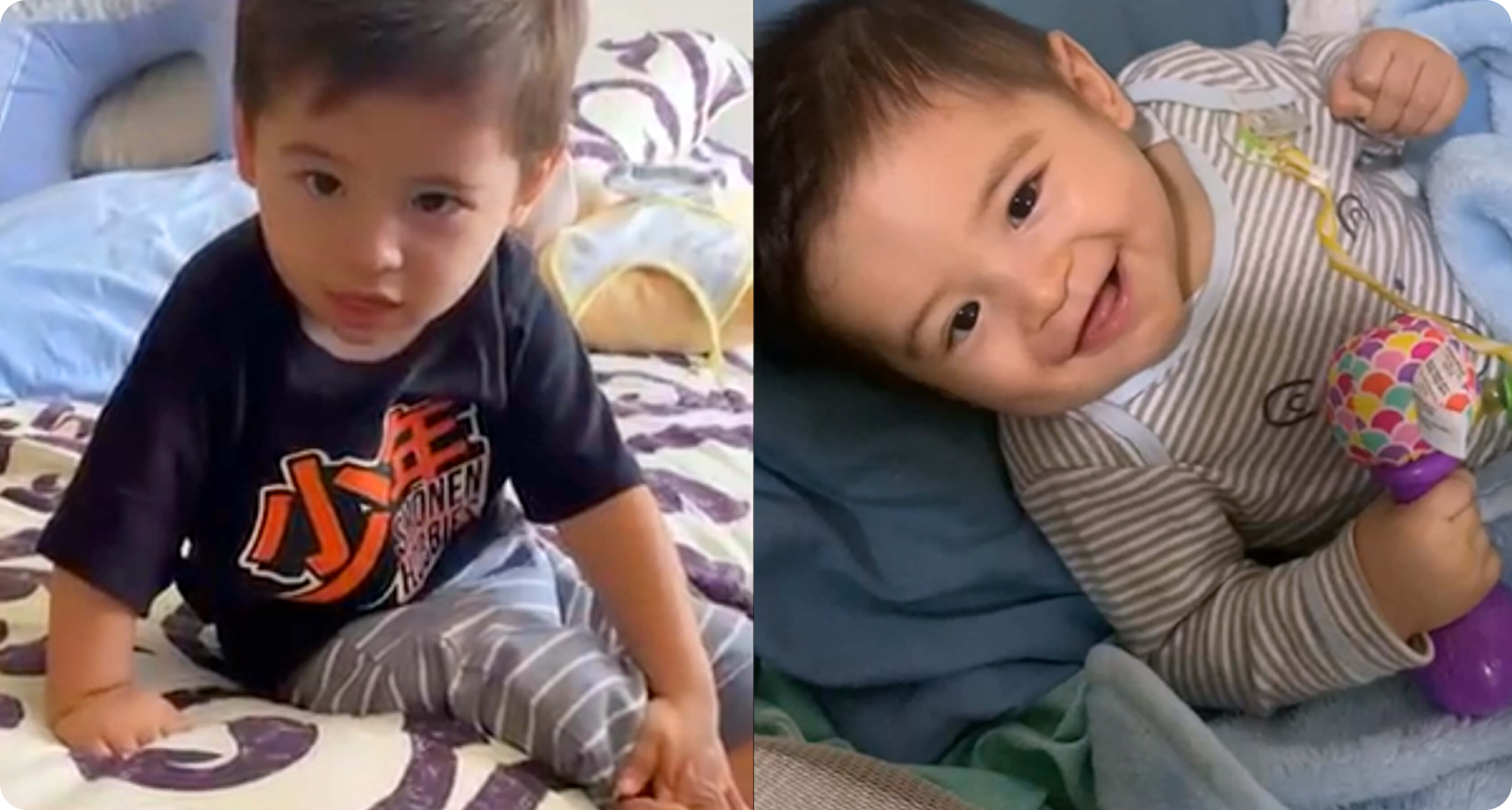
Beyond these assessments, ARC also improved in his abilities and quality of life following the protocol, including:
- Better head support, back posture when sitting with support, and less help needed to stay seated.
- Greater ability to move both hands.
- Greater ability to chew and swallow food.
- Increase in vocalizing and smiling, communicating through gestures, and following directions.
- Improved cooperation when changing clothes and communicating about a dirty diaper.
- Greater strength in all four limbs leading to increased mobility and improved crawling.
Contact us if you or a loved one are interested in receiving our CP protocol
References #
- Harb A, Margetis K, Kishner S. Modified Ashworth Scale. StatPearls. 2025.
- Haley SM, Coster WJ, Ludlow LH, Haltiwanger JT, Andrellos PJ. Pediatric evaluation of disability inventory. Physical & occupational therapy in pediatrics. 1992.
- Varni JW, Seid M, Rode CA. The PedsQL: measurement model for the pediatric quality of life inventory. Med Care. Feb 1999;37(2):126–39. doi:10.1097/00005650-199902000-00003