Q: What are NeuroCytonix protocols? #
NeuroCytonix protocols are gentle, non-invasive sessions that use low-energy radio waves and magnetic fields—similar to MRI—to help the brain heal and function better. Our protocols are currently being studied for their potential to support brain regeneration and improve nervous system function. Each protocol is personalized and takes place for one hour a day over 28 days at our clinical center in Monterrey, Mexico.
Q: How does your technology work? #
The exact mechanism of action is still under investigation. However, imaging data from our clinical trial participants suggest that, after receiving the protocol, there may be increases in gray and white matter volume as well as the number of healthy neural tracts. These are preliminary observations, and further research is ongoing.
Q: What should I expect during a protocol? #
The protocol takes 28 days. Each day, participants receive a protocol tailored to their unique physiology during a one-hour session, always at the same time. Keeping the schedule consistent helps us gather the most useful information about how the technology works. While we strongly recommend completing all 28 days without interruption, we can allow a short pause (up to 48 hours) if there’s an emergency.
During each session, small movements — like moving hands or feet, turning the head slightly, or talking — are okay if the person returns to their original position. However, big movements, like sliding around or turning all the way, aren’t allowed because they can affect how the treatment is delivered.
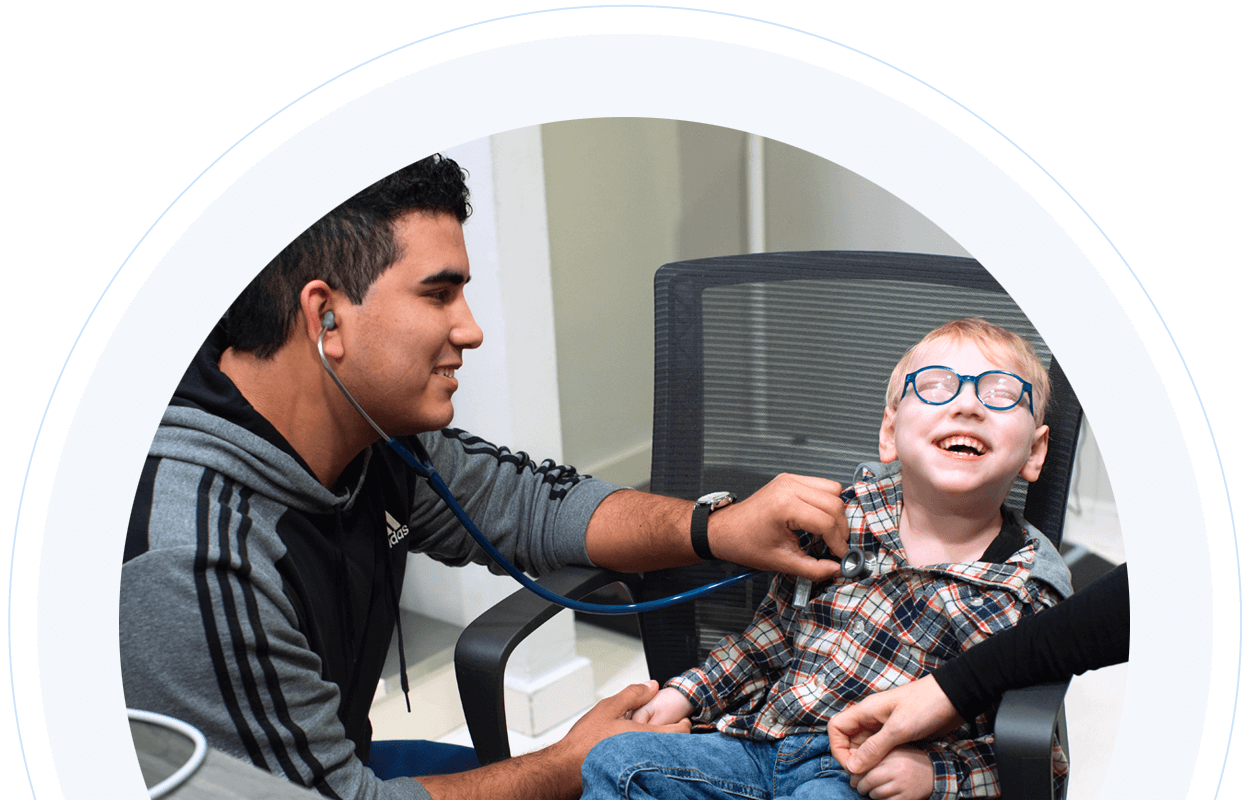
For children, we recommend that parents or guardians help them feel calm and prepared before arriving. Some parents find it helpful to schedule the appointment when their child is sleepy or ready to rest, since this can make it easier to stay still. If your child has difficulty keeping their head straight because of their condition, that is okay. They do not need to hold their head perfectly straight, but they should remain centered in the machine.
Q: Who is eligible? #
Our neurologists carefully review each person’s medical history and condition to determine whether they qualify for the protocol. Some children and adults may not be eligible.
A person is ineligible for the protocol if they have any of the following:
- A brain tumor or other abnormal growth in or around the brain
- An implanted medical device that could be affected by the electromagnetic field produced by the device
- A condition that our neurologists determine is not appropriate for this protocol
- Certain viruses or other medical conditions that could potentially be worsened by the protocol
Q: What types of metal are allowed? #
The technology uses strong magnetic fields, like those in an MRI machine. That means the same safety rules for metal apply. Metals like gold, silver, titanium, and austenitic stainless steel are generally safe because they aren’t magnetic — but we still recommend not wearing any metal during treatment.
Pacemakers and cochlear implants are not allowed, as they are not compatible with the magnetic field.
Some other implanted devices, such as medication pumps or heart valves, may be safe — but we will need written confirmation from the manufacturer before you can begin treatment.
If you’re unsure about the materials in any implant or device, please check with your doctor or the manufacturer. You can also learn more about MRI safety at RadiologyInfo.org.
Q: Are these protocols safe? #
All protocols in use have been carefully reviewed and approved for investigational use by independent ethics, safety, and scientific committees. Before offering the protocol more broadly, we studied its safety in a rigorous clinical trial. No harmful side effects were reported.
The most commonly observed effect during the protocol was drowsiness, which is believed to be related to the body’s natural regeneration processes. A few participants experienced a mild headache, which went away after drinking water. Some participants with motor system conditions experienced muscle spasms after treatment, but these were short-lived.
The NeuroCytonix device uses radiofrequency waves—a low-energy form of electromagnetic radiation, similar to what is used in MRI. These waves are non-ionizing and considered safe.
Children with cerebral palsy and epilepsy have received the protocol, and it has not been linked to an increase in seizures. In fact, in our clinical trial, data suggest that children who received the protocol experienced fewer seizures over time.
Q: What changes should I expect afterward? #
Results vary by individual. Children with milder symptoms often experience more noticeable improvements, while those with more severe conditions might require additional sessions. After more than 500 participants with various neurological conditions, we have observed positive changes in thinking ability, emotional well-being, social skills, and overall quality of life for many participants. Timing can also differ, but many participants notice gradual progress during or after completing the protocol.
Q: How long does the effect last? #
The effect of the protocol and its duration is variable and depends on the individual and their specific medical condition. While many participants with stable medical conditions see benefits that last for years, others with neurodegenerative conditions like Alzheimer’s or Parkinson’s disease may experience a return of symptoms over time.
Q: How do you look for changes in the brain? #
As part of each participant’s care, we use advanced brain imaging tools to study brain structure and connectivity before and after the protocol. This includes techniques like electroencephalography (EEG), diffusion tensor imaging (DTI) and tractography, which help map the brain’s communication pathways, as well as volumetric scans to measure different brain areas.
These imaging methods are part of our clinical research and help us monitor how the brain responds to the protocol. While this data is reviewed by our medical team as part of individual care, results from tractography are not shared with participants until the research findings are published.
If you or a loved one are interested in one of our protocols, please contact us for more information.
NeuroCytonix Mexico Clinical Research Center #
Discover the future of medical research at our state-of-the-art clinical research center.